The
Lords of Kinfauns

Earls of Crawford, Earls of Kinnoull, Lords of Gray & Earls of Moray

Lord Kinfauns

Timeline

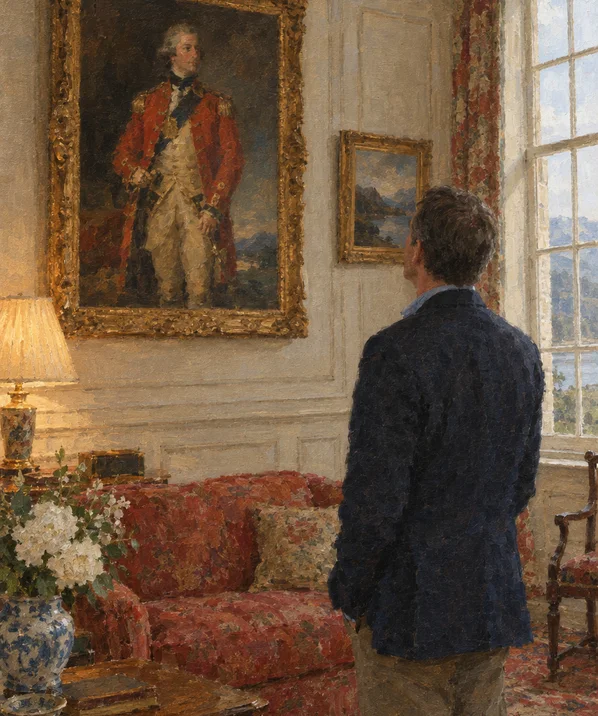
Twenty-six lords across seven centuries. The lordship of Kinfauns begins, if you believe the legend, with a pardoned French pirate. It then passes through Charteris knights, a Lindsay earl, the Hays, the Blairs, the Grays and the Earls of Moray, and it is held today at Newhall in County Clare. The whole run is set out below, lord by lord.


Mythical early Lord of Kinfauns Sir Thomas de Longueville

The Pirate
"Red Reaver"
Sir Thomas Charteris

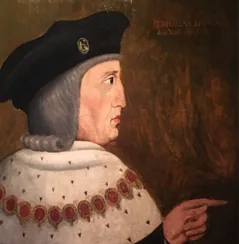
Every good title needs a founding legend, and Kinfauns has one of the best: its first lord was a pirate. According to legend the first lord of Kinfauns was Sir Thomas de Longueville, later named Charteris. He was a native of France, and representative of a family well known in that country; but at the close of the thirteenth century, when at the court of Philip the Fair, having a dispute with one of the noblemen, he slew him in the king’s presence. Being refused pardon for the rash and bloody act, he betook himself to the high seas, and under the name of the Red Reaver, became terrible to all seafaring people as a remorseless pirate.


Sir William Charteris

Sir William Charteris

The pirate’s son kept what his father had won. Sir William, 2nd of Kinfauns, succeeded his father in the half of Kinfauns. In 1378 he also had a charter of confirmation from James Douglas, son and heir of Sir William, Earl of Douglas, for the lands of Lumphanan in Aberdeenshire. Those had been granted by John Randolph, Earl of Moray, to his uncle Sir Patrick de Carnoto, who seems to have died without children, and the grant was confirmed again by Robert Stewart, Earl of Fife, on 17 March 1391. Note the Earl of Moray in that chain. It is not the last time the name appears on this page.


Sir Thomas Charteris

Sir Thomas Charteris of Cagnore

With Sir Thomas the paper trail gets firmer. He had a charter for the half lands of Kinfauns as heir to his father on 5 April 1408. On 10 July 1412 Robert de Ross of Craigie gave him a licence to take water through his lands, and in it calls him his “beloved brother”, a small human touch across six centuries.


Sir William Charteris

Sir William Charteris of Cagnore

Sir William was served heir to his grandfather, Thomas Charteris, in the lands of Lumphanan on 1 October 1443, and he went on to marry three times. His first wife was Christian, daughter of Sir Robert, 1st Lord Erskine, and widow of Patrick, 1st Lord Graham, who had died in 1465. She is named with him in a complaint dated 9 July 1476.


1st Lord Kinfauns

de jure

1st Lord Kinfauns
Sir Thomas Charteris

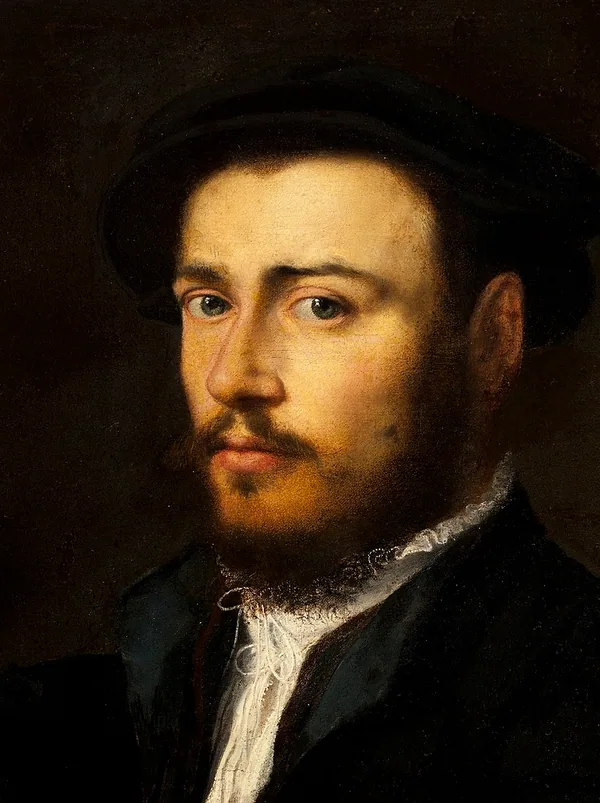
This is the moment the title enters the record. In 1487 King James III of Scots granted a crown charter, entered in the Great Seal, in which Sir Thomas is styled dominus Kynfawnis, Lord Kinfauns. It is the first surviving use of the title, though the family had held Kinfauns by charter since 1330. The crown charter confirmed one of 13 July 1470, by which his father had conveyed to him the lands of Haltoun, Craigton, Pitmorche and Craigour, all in the lordship of Lumphanan, and those of Kinfauns and Pitsindy in the lordship of Kinfauns.


2nd Lord Kinfauns

2nd Lord Kinfauns
Sir John Charteris

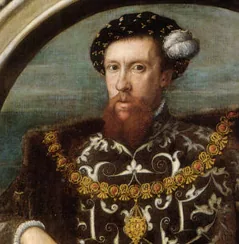
Sir John first appears as son and heir of Sir Thomas Charteris of Kinfauns on 17 September 1506, witnessing the charter by which William Comyn of Inverallochy gave his lands of Audiall to the University of Aberdeen. He was served heir to his father in the lands of Kinfauns on 2 October 1520.


3rd Lord Kinfauns

3rd Lord Kinfauns
Sir John Charteris

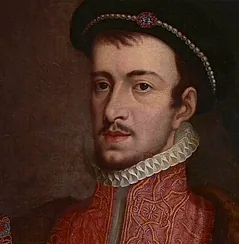
John became lord because his brother was murdered, and he did not let it rest. He was served heir to Thomas on 10 April 1553, and on 11 March 1553 he and his brother’s widow, Katherine Graham, raised an action against the men responsible for the killing.

By 17 May 1551 he had married Janet, daughter of Sir James Chisholm, 2nd of Cromlix, and together they disponed their lands of Lumphanan to Mr Patrick Carnegy. Then came a turn nobody could have planned. His only surviving child, George, died before him, so he adopted Henry Lindsay as his heir, who appears afterwards as Henry Lindsay alias Charteris, filius adoptive of John Charteris of Kinfauns. John died about 1600.


4th Lord Kinfauns

4th Lord Kinfauns
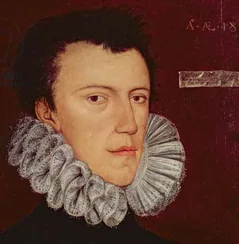
13th Earl of Crawford

An adopted heir, a wedding present and an earldom, all in one life. Henry Lindsay became Harry Charteris by adoption and held the lordship of Kinfauns until 1608, when he gave it, lands and all, to his son as a wedding present. The charter calls him Lord of Carelstoun. He later inherited the earldom of Crawford, though he enjoyed it only for the last two years of his life.


5th Lord Kinfauns

5th Lord Kinfauns
Sir John Lindsay

Not many people can say they were given a lordship as a wedding present. Sir John Lindsay was, and in 1608 the King confirmed it in a royal charter under the Great Seal. That King was James VI, who was by then also King James I of Great Britain, France and Ireland. Sadly Sir John died before his father.


6th Lord Kinfauns

Earls of Kinnoull

6th Lord Kinfauns
1st Earl of Kinnoull
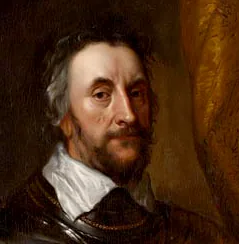
Sir George Hay

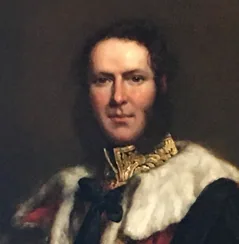
With Sir George Hay, born in 1570, Kinfauns arrives at the very top of Scottish public life.

In 1621 he succeeded to the lands and lordship as 6th Lord Kinfauns, a title tied to the barony. He was made Viscount of Dupplin in 1627 and Earl of Kinnoull in 1633 by King Charles I, and along the way he served as Lord Clerk Register, Privy Councillor and Lord Chancellor of Scotland. A Lord Kinfauns as Lord Chancellor of Scotland is hard to beat.


7th Lord Kinfauns

7th Lord Kinfauns
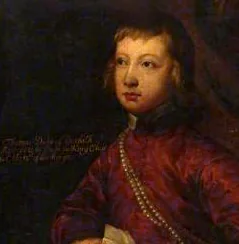
2nd Earl of Kinnoull
Sir George Hay

Sir George Hay, born in 1596, was the eldest and only surviving son of the 1st Earl of Kinnoull and Margaret Halyburton. From 1621 to 1634 he was styled Lord Kinfauns as a courtesy title, taken from his father’s lordship, and in 1634 he succeeded as 2nd Earl of Kinnoull and 7th Lord Kinfauns.


8th Lord Kinfauns

Blair and Carnegie Lordship

8th Lord Kinfauns
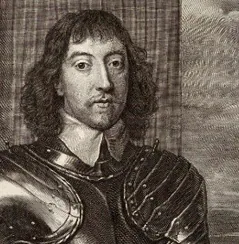
Sir Alexander Blair of Balthayock

With Sir Alexander the lordship passes to the Blairs. He succeeded to Kinfauns in 1647, and in February 1654 he and his wife, Dame Elizabeth Fotheringham, formally granted the lands and lordship, with their rights and properties, to their son William Blair of Kinfauns by a Crown-backed disposition. The grant spells out the hereditary rights that went with the title: the office of Baillie of the Tay, the teind sheaves and the salmon fishings on the river.


9th Lord Kinfauns

9th Lord Kinfauns
Sir William Blair of Kinfauns, 1st Baronet

Sir William Blair of Kinfauns was created 1st Baronet of Kinfauns in the Baronetage of Nova Scotia on 18 September 1666. The baronetcy was limited to the heirs male of his body, and there lay the problem: he had three daughters and no sons.


10th Baroness of Kinfauns

10th Baroness of Kinfauns
Ann Blair

Here is the first woman to hold Kinfauns in her own right. Ann Blair, daughter of Sir William Blair of Kinfauns, married the Hon. Alexander Carnegie, son of David Carnegie, 2nd Earl of Northesk, in 1671. By a financial arrangement with her father the couple received a crown charter of the lands and barony of Kinfauns on 28 February 1673, which made Ann the 10th Baroness of Kinfauns. They had at least one son, Alexander Blair Carnegie, who succeeded as 11th Lord Kinfauns in 1695.


11th Lord Kinfauns

11th Lord Kinfauns
Alexander Blair Carnegie

Born around 1672, the son of Alexander Carnegie and Ann Blair, he inherited Kinfauns through his mother and joined the two family names as Blair Carnegie. He succeeded to the lands and lordship in 1695.


12th Lord Kinfauns

Lords of Gray

12th Lord Kinfauns
John 11th Lord Gray

The Grays arrive by marriage. On 17 October 1741 John, 11th Lord Gray, married Margaret Blair, heiress of Kinfauns in Perthshire, and with her the lordship and property came into his family. They had four sons, three of whom succeeded to the title in turn, and seven daughters.


13th Lord Kinfauns

13th Lord Kinfauns
Charles 12th Lord Gray

Charles, son of John, 11th Lord Gray, and Margaret Blair, succeeded his father in 1782. He had only four years as lord and died in 1786.


14th Lord Kinfauns

14th Lord Kinfauns
William 13th Lord Gray

William, Charles’s younger brother, took the title on his death in 1786 and held it for two decades, running the family estates until 1807.


15th Lord Kinfauns

15th Lord Kinfauns
14th Lord Gray
Sir Francis Gray

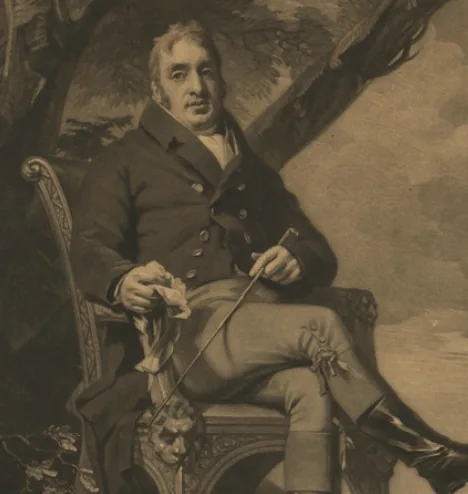
Francis, the youngest son of the 11th Lord Gray, assumed the title in 1807, the third brother in a row to do so. He sat in the House of Lords as a Scottish representative peer from 1812 to 1842 and served as Postmaster-General of Scotland. Kinfauns fans owe him most for the castle: the new Kinfauns Castle, built in the 1820s, was his project.


16th Lord Kinfauns

16th Lord Kinfauns
John 15th Lord Gray

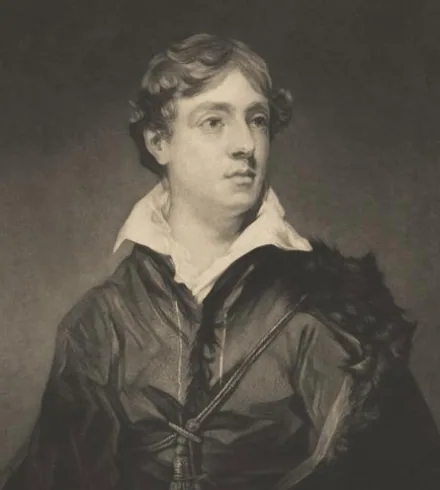
John, son of Francis, followed his father into the House of Lords as a Scottish representative peer from 1842 to 1867, and was a Deputy Lieutenant of Perthshire. He carried on developing the Kinfauns estate.


17th Baroness of Kinfauns

17th Baroness of Kinfauns
Madelina 16th Lady Gray

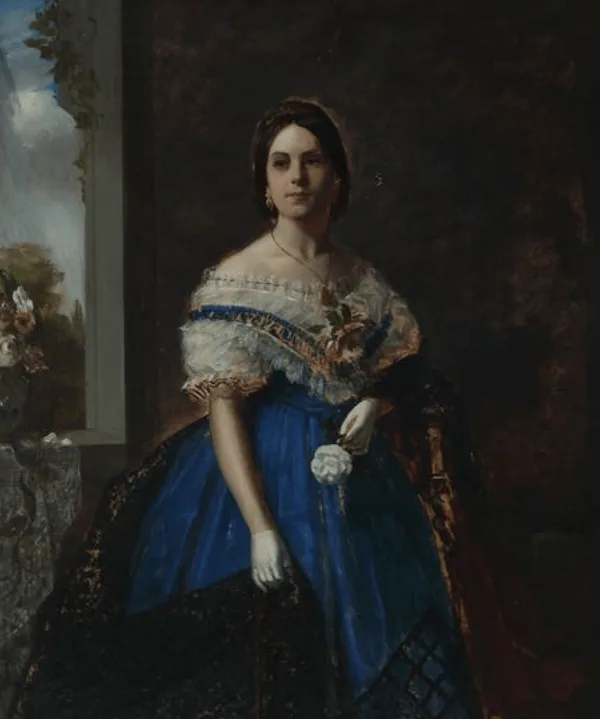
Madelina, John’s sister, inherited on his death. She never married, and held the title as Lady Gray until she died in 1869.


18th Baroness of Kinfauns

18th Baroness of Kinfauns
17th Lady Gray
Margaret Murray

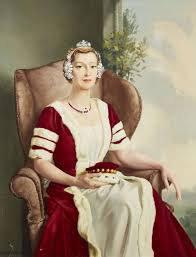
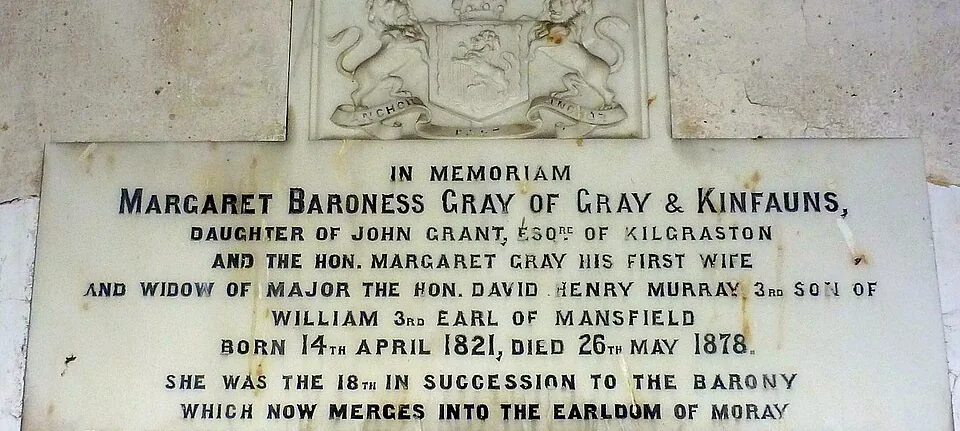
Margaret was Madelina’s niece, and her tombstone is one of the best pieces of evidence on this whole page. It records that her ladyship was 18th in succession to the barony, the lordship of Kinfauns, which then merged into the Earldom of Moray, while the lordship of Gray went off down another line.


19th Lord Kinfauns

Earls of Moray

19th Lord Kinfauns
15th Earl of Moray
Edmund Archibald Stuart Gray

From here the lords of Kinfauns are Earls of Moray. Edmund, a cousin descended from the 11th Lord Gray, married Anna Mary Collinson on 6 September 1877. He succeeded to the Lordship of Kinfauns in 1878 and to the Earldom of Moray in 1895. He died on 11 June 1901 with no direct heirs, and his younger brother, Francis James Stuart, succeeded him.


20th Lord Kinfauns

20th Lord Kinfauns
16th Earl of Moray
Lieut. Col Francis James Stuart

Lieutenant Colonel Francis James Stuart was a soldier before he was an earl, reaching that rank in the Liverpool Regiment.


21st Lord Kinfauns

21st Lord Kinfauns
17th Earl of Moray
Morton Gray Stuart

Born on 16 April 1855 in Blandford, Dorset, Morton was the youngest son of the Reverend Edmund Luttrell Stuart and Elizabeth Jackson, and took a Master of Arts degree at Cambridge.


22nd Lord Kinfauns

22nd Lord Kinfauns
18th Earl of Moray
Francis Douglas Stuart

Francis Douglas Stuart was born on 10 July 1892, the eldest son of Morton Gray Stuart, 17th Earl of Moray, and Edith Douglas Palmer. In the First World War he served as a Captain in the Scottish Horse and in the Royal Air Force, and won the Military Cross.


23rd Lord Kinfauns

23rd Lord Kinfauns
19th Earl of Moray
Archibald John Morton Stuart

Born in Edinburgh on 14 November 1894, he was the second son of the 17th Earl of Moray, Morton Gray Stuart, and Edith Douglas Palmer. He was a navy man: educated at the Royal Naval Colleges, he served in the Royal Navy in both World Wars and reached the rank of Lieutenant-Commander.


24th Lord Kinfauns

24th Lord Kinfauns
20th Earl of Moray
Douglas John Moray Stuart

The 24th lord had the most unexpected childhood of any of them. Born in Johannesburg on 13 February 1928, he grew up on a cattle ranch in Botswana and only came back to Scotland in 1943. He studied at Trinity College, Cambridge, and the Royal Agricultural College, and went on to lead the Moray Estates Development Company through years of diversification and modernisation.


Castle Stuart, near Inverness, built by the 3rd Earl of Moray in 1625Castle Stuart · Dave Conner, CC BY 2.0, Wikimedia Commons

25th Lord Kinfauns
21st Earl of Moray
John Douglas Stuart

John Douglas Stuart is the son of Douglas John Moray Stuart, 20th Earl of Moray, and Lady Malvina Murray, and was educated at Ampleforth College and St Andrews University.


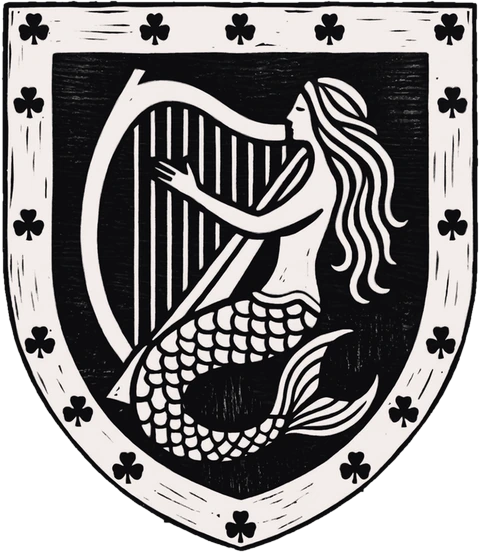
Arms of the Lords of Kinfauns

Commane Lordship

26th Lord Kinfauns Chief of Ó Comáin

The 26th lord brings the title to County Clare. Fergus Commane is Chief of Clan Ó Comáin, an Irish clan recognised in 2025 by Clans of Ireland, whose patron at the time was Michael D. Higgins, President of Ireland. Its line is traced to the early kings of the Déisi of Munster and to the medieval chiefdom of Tulach Commáin. He married Maria Nadolski, with whom he had three children, and her family, Warzęta Korwin z Ślepowrony, has been counted among the Polish nobility since 1224. So the present lords of Kinfauns have an Irish chief on one side and a Polish noble house on the other.